What Next? What Now? – Some Ideas for Reading and Taking Steps
What Next? What Now? – Some Ideas for Reading and Taking Steps By Ralph Pite (ralph.pite@bristol.ac.uk) Here are… Five Top Sixes (and a Last Hurrah) I hope they may…

What Next? What Now? – Some Ideas for Reading and Taking Steps By Ralph Pite (ralph.pite@bristol.ac.uk) Here are… Five Top Sixes (and a Last Hurrah) I hope they may…

Listening to the natural world and hearing how it used to sound. By Francesca Mackenney and Jamie Castell The negative effects of noise on mental as well as physical…

Eco-anxiety is connected to feelings of isolation: not only a sense of disconnect from the vanishing natural world but also in terms of time. The future seems less and…

By Caroline Lucas Caroline Lucas, Britain’s first Green MP and, since 2025, the first Professor of Practice in Environmental Sustainability at the University of Sussex, says why English…

By Hannah Green Environmentalism focussed to start with on wilderness – on protecting areas still untouched by human activity. That was always questionable: describing somewhere as ‘untouched’ is a…

By Michael Malay Michael Malay’s Late Light won the Wainwright Prize in 2024. Here, Michael introduces this book ‘about falling in love with vanishing things’: Instagram And…
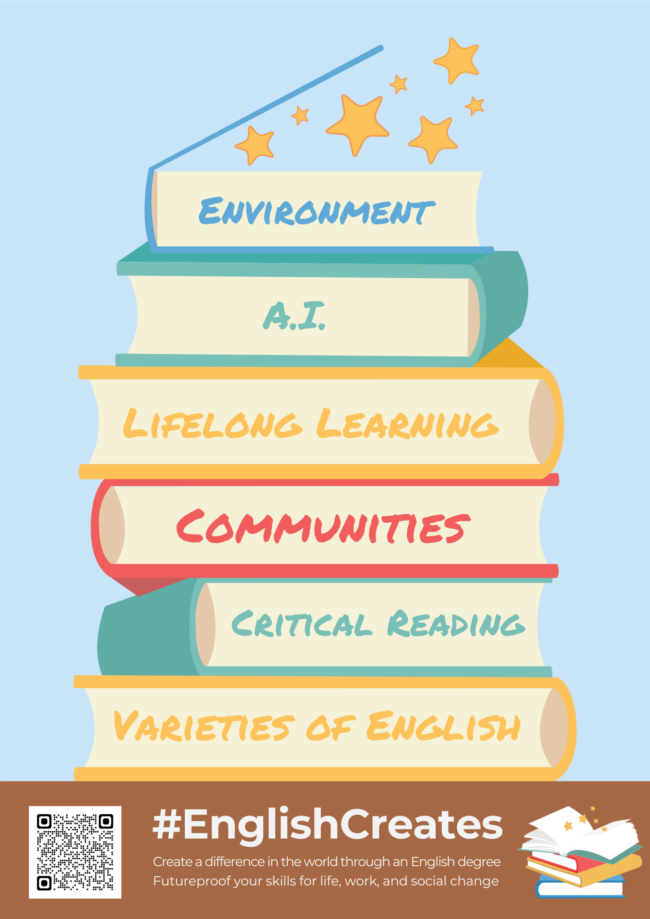
The English Creates campaign kicks off again for 2026 with an emphasis on futures and the way in which English (in all its forms and disciplines) engages with a…
THE GRAPHS DON’T WORK Professor Ralph Pite, Twentieth Century Poetry and Romantic Period writing (University of Bristol) Climate change is all about numbers: 1.5 degrees Celsius of warming; 425…

ENGLISH AND THE ENVIRONMENT Professor Ralph Pite, Twentieth Century Poetry and Romantic Period writing (University of Bristol) The word ‘January’ is from the Roman god, Janus – god…