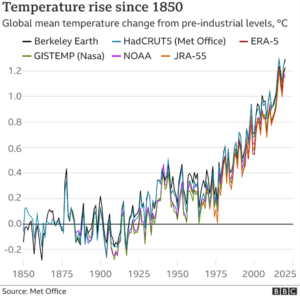
THE GRAPHS DON’T WORK
Professor Ralph Pite, Twentieth Century Poetry and Romantic Period writing (University of Bristol)
Climate change is all about numbers: 1.5 degrees Celsius of warming; 425 parts per million of atmospheric CO2. In schools, it’s taught through Chemistry and Geography. (Even the recent curriculum review stuck with this; it’s here: Curriculum and Assessment Review Final Report – GOV.UK – see pages 40-41). And the solutions you hear proposed are exclusively technological: renewable energy, EVs, upgrading the grid. English is kept at arm’s length – useful only to communicate the science.
Yet knowing the facts doesn’t necessarily help. ‘When scientists say we will cross tipping points leading to chaotic weather for centuries, we retreat to incredulity [….] it is too much to bear’ (Clive Hamilton in Engaging with Climate Change, ed. Sally Weintrobe). Information instills panic (‘eco-anxiety’); panic creates denial.
Elif Shafak says we must begin with ‘honest recognition’. She’s right. And the science is true. It needs to be known and taught. But it cannot produce honesty, not by itself.
Climate fiction (Cli-fi) novels make ‘experiences far more real than endless graphs or plots of temperature variations’; they are ‘vehicles that can help us imagine’ and ‘get us to think about these what ifs—these future Earths’. They ‘ (John Abraham, CliFi – A new way to talk about climate change | Climate crisis | The Guardian). Likewise, graphic novels transform knowledge into reflection and understanding, ‘bridging the macro scales of environmental change with the micro scales of our everyday human lives’ (Dominic Davis in The Conversation: Three graphic novels that creatively confront the climate crisis).
Because the graphs don’t work, literature – of all kinds – is crucial.