By Charlotte Wong, Hanna Fischer, Sin Ka Lau (Reading University)
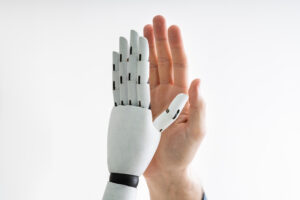
Human made image
AI-written texts are on the rise through the widespread use of large language models (LLMs).
This means that it is crucial to understand the signs of AI written texts going forward.
However, a study conducted by Park (2026) on ‘Creative Writing and AI: A 2024 Case Study’, shows that we lack the insight to distinguish between AI and human-written texts. He set up a contest that allowed AI to compete in a creative writing competition alongside human writers, and the results were thought-provoking.
The judges saw a passage that sounded incredibly mechanical and thought it was written by AI, when it was written by a human. A passage that flowed smoothly and was easy to understand was assumed to be human written, but was written by AI. The winner of the contest was a passage made with human/machine collaboration.
Why were the judges unable to distinguish who wrote the texts?
AI is very good at adhering to human norms, namely standardized writing, tidy organization, descriptive passages and realistic dialogue. From this story, we can see that it is virtually impossible to distinguish AI and human written texts currently. We may need to define what it means by “good writing” to see a potential difference.
What do you think? Do you have any tips or tricks to identify AI-written texts? What can we do to combat this problem?
Works Cited
Park (2026) ‘Creative Writing and AI: A 2024 Case Study’: https://www.cambridge.org/core/services/aop-cambridge-core/content/view/0EBEFFF8E04AFC385F1962D1A3482E96/S2977017325100984a.pdf/creative_writing_and_ai_a_2024_case_study.pdf [cambridge.org]