
Nabila Ahmed
BA English, Goldsmiths, University of London
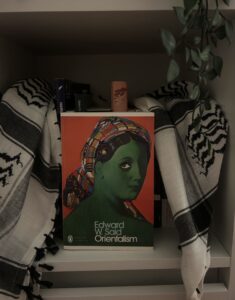
When I began studying English, I thought I loved literature for its beauty: for Shakespeare’s language, for the drama of tragedy, for the sheer pleasure of words. I didn’t yet realise that literature is never neutral.
Reading Orientalism by Edward Said was a turning point. I remember closing the book and feeling as though something fundamental had shifted. Said made me notice how easily entire cultures can be reduced to stories told about them, and how those stories travel quietly through art, scholarship and everyday language. It made me more alert, but also more responsible as a reader.
Knowing that Said wrote as a Palestinian intellectual gave the book an added weight for me. His work showed me that criticism can be both rigorous and deeply human, and that scholarship can challenge power without losing its precision. I began to read differently – noticing how even the texts I love participate in wider cultural imaginations.
Orientalism did not diminish my love of literature. It only deepened it. It taught me that studying English is not only about aesthetics, but about ethics: about asking who speaks, who is spoken for, and why it matters.