
Ira Bhattacharjee
BA English with Creative Writing, Goldsmiths, University of London
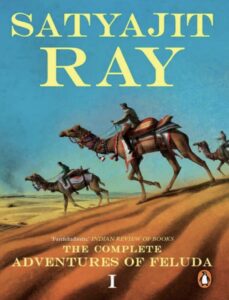
I first encountered the works of Satyajit Ray as a child who mostly consumed English authors and English worlds: Enid Blyton, Charles Dickens, Roald Dahl, and C. S. Lewis. By then, I had absorbed what Chimamanda Ngozi Adichie calls the ‘single story’: all my writing featured white children in foreign lands; a book about Indians felt almost inconceivable.
Stumbling upon Ray’s Feluda stories, I felt the same fascination generations have felt reading Sherlock Holmes, only, the eponymous protagonist Feluda, a young Bengali detective who traversed all over India solving cases with his cousin, Tapesh, faced villains in the streets of Mumbai, loved Nizam’s mutton rolls, and read Tintin (like me!), seemed so familiar it felt as though the ‘single story’ I had internalised had quietly fractured.
I hunted down more of Ray’s stories: tales of the supernatural, ambitious science fiction, and experimental, literary stories, all written in the same simple, lucid, and powerfully striking prose that stirred readers’ imaginations. As I expanded my repertoire of books that challenged my notions of what language could accomplish, I kept returning to Ray’s collection of stories for the simple delight they brought me and the confidence to write stories about a world I recognise, and myself within it.