The Sea, the Sea! – 1
Professor Ralph Pite, Twentieth Century Poetry and Romantic Period writing (University of Bristol)
‘The river is within us, the sea is all about us;’ T. S. Eliot wrote in ‘The Dry Salvages’, ‘The sea is the land’s edge also’ where we may discover, ’hints of earlier and other creation:’
The starfish, the horseshoe crab, the whale’s backbone;
The pools where it offers to our curiosity
The more delicate algae and the sea anemone.
(Four Quartets 3 The Dry Salvages – poem by T.S. Eliot | PoetryVerse)
Oceans have always seemed mysterious, vast and invulnerable – literally and metaphorically, ‘unfathomable’. Until recently, that is. We are the first generation of humans to have altered the ocean.
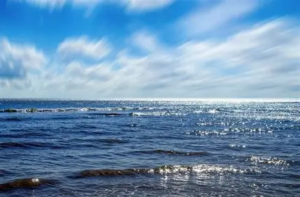
Global heating means the oceans are rising in temperature (Record ocean warming fuels sea level
and storm risks – Oceanographic)Increased CO2 in the atmosphere is making the oceans more acidic. (see Ocean Acidification Definition and Causes: An In-Depth Exploration | University of New Hampshire)
And, most graphically perhaps, huge quantities of waste plastic are finding their way into the sea.

These changes are causing concern; the environmental crisis is evidently affecting everywhere and everything on the planet. the most distant particular, respond? So, how might the Arts, and English in particular, respond?
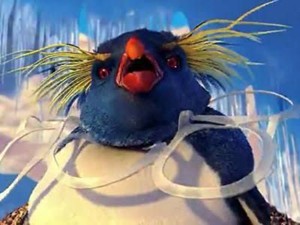
The animated film, Happy Feet in 2006 showed an Antarctic penguin, with the plastic rings of six-pack around its neck.
The film raised awareness about industrialised fishing and other environmental impacts; plastic pollution was linked to these and the decline of the oceans’ ecosystem. All in a jukebox musical with Robin Williams among the voice-cast. (Ecocinema, Media, and the Environment: Happy Feet and Human Ecology: A Century of Environmentalism)’
Academics were not far behind. In 2009, the American Shakespeare scholar, Steve Mentz coined the term ‘Blue Humanities’, initiating inquiry into the oceans themselves and shifting attention ‘from land to ocean, and from the surface to what lies below’. This change brings with it new perspectives, that ‘challenge dominant epistemologies and demand new approaches’ (Introduction to Blue Humanities – Literary Theory and Criticism). See: The Blue Humanities | National Endowment for the Humanities; and see: We’re Protecting the Ocean Wrong • The Revelator
In the next two posts, Laurence Publicover and Rachel Murray, both teaching English at University of Bristol, show what the excitement, fascination and potential of these new approaches to ‘the sea about us’ – and how, as Laurence writes, as well as ‘understanding the science of the sea’ we need to consider ‘how we think about the sea, in literature and beyond’.